



When it comes to driving safely on Homosassa’s roads, advanced technology plays a pivotal role. GMC and Buick vehicles at Eagle Buick GMC are equipped with cutting-edge driver-assist features designed to enhance safety and boost confidence behind the wheel. Whether you’re commuting through town or embarking on a road trip along Florida’s scenic coast, these systems provide an extra layer of security for you and your passengers.
Advanced Driver-Assist Features in GMC and Buick Vehicles at Eagle Buick GMC
Modern vehicles are increasingly sophisticated machines, equipped with technology designed to enhance safety and driver confidence. GMC and Buick are at the forefront of this movement, offering a comprehensive suite of advanced driver-assistance features (ADAS) that act as guardian angels on the road. Let’s delve deeper into some of these core features and explore how they contribute to a safer and more secure driving experience.
Lane Keep Assist with Lane Departure Warning
Imagine cruising down a highway, lost in thought for a fleeting moment. Suddenly, a gentle nudge on the steering wheel and a visual alert on the instrument cluster bring you back to focus. This is the magic of Lane Keep Assist with Lane Departure Warning, a critical ADAS feature in GMC and Buick vehicles. This system utilizes strategically placed cameras to continuously monitor lane markings on the road. If the car begins to veer unintentionally out of its lane, typically due to driver inattention or fatigue, the system springs into action. An audible or visual alert – often a blinking light on the side mirror or a chime – warns the driver of their potential lane departure.
In some models, Lane Keep Assist goes beyond mere warnings and provides gentle steering torque to guide the vehicle back towards the center of the lane. This subtle intervention can be a lifesaver, especially during long journeys or moments of driver fatigue. Imagine navigating a monotonous stretch of highway late at night – Lane Keep Assist can act as a second pair of eyes, gently nudging the vehicle back into its lane if drowsiness causes you to drift slightly. Lane Keep Assist with Lane Departure Warning plays a crucial role in preventing unintentional lane departure accidents – a common cause of head-on collisions. By providing timely warnings and corrective steering assistance, the system helps drivers maintain lane discipline and navigate roads more securely.
The Power of IntelliBeam
Nighttime driving presents unique challenges, with limited visibility requiring drivers to be extra cautious. GMC and Buick’s IntelliBeam technology takes the guesswork out of nighttime headlight usage, ensuring optimal visibility without compromising the safety of oncoming drivers. This innovative system utilizes a forward-facing camera to detect headlights from oncoming vehicles and taillights of vehicles ahead. When no oncoming traffic is present and the road ahead is clear, IntelliBeam automatically switches the headlights to high beams, providing maximum illumination for improved visibility. Imagine navigating a dark, winding country road – IntelliBeam ensures you can see potential hazards like animals or unexpected turns well in advance.
However, the beauty of IntelliBeam lies in its intelligent automation. As soon as the camera detects an oncoming vehicle or taillights in the distance, the system seamlessly switches back to low beams, preventing glare for approaching drivers. This constant adjustment ensures optimal visibility for the driver while maintaining courtesy and safety on the road. Imagine driving on a busy highway with frequent oncoming traffic – IntelliBeam eliminates the need to constantly toggle between high and low beams, reducing driver distraction and promoting safety for everyone on the road.
IntelliBeam not only enhances nighttime driving comfort but also contributes to overall safety. By providing superior visibility in low-light conditions, drivers can react faster to potential hazards, reducing the risk of nighttime accidents.
Forward Collision Alert
Imagine driving down a busy highway when the car suddenly emits an audible warning and a visual alert appears on the dashboard. This might jolt you back to focus, but it could also be a life-saving intervention. This is the essence of Forward Collision Alert, a crucial ADAS feature in GMC and Buick vehicles.
This system utilizes a combination of radar and camera technology to constantly monitor the distance and closing speed of the vehicle ahead. If the system detects a potential collision scenario – when the distance to the car in front shrinks rapidly – it triggers a multi-stage warning response. In the initial stage, the driver may receive a visual alert on the instrument cluster, such as a flashing light or a warning message. Imagine approaching a stopped car at a red light and not noticing it in time – Forward Collision Alert would provide a visual cue to alert you of the danger zone. As the potential danger increases, the system may escalate the warnings with an audible chime or a more prominent visual cue. Imagine the car in front braking suddenly – Forward Collision Alert might emit a loud chime to grab your attention and urge you to take immediate action. Forward Collision Alert serves as a crucial line of defense against rear-end collisions. By providing timely warnings of potential danger, it allows drivers to react swiftly, whether it’s by applying brakes, adjusting their following distance, or taking evasive maneuvers if necessary. Imagine a scenario where the car ahead swerves to avoid a hazard – Forward Collision Alert can provide the critical warning needed to react appropriately and
Guardian Angels of the Road: More Advanced Driver-Assistance Features
Having delved into core features like Lane Keep Assist, IntelliBeam, and Forward Collision Alert, we continue our exploration of the guardian angels that GMC and Buick offer in their vehicles. These additional ADAS features take safety a step further, promoting a more secure and stress-free driving experience.
The Following Distance Indicator
Tailgating is a dangerous habit that significantly reduces reaction time in case of a sudden stop by the car ahead. Imagine cruising down the highway, blissfully unaware that you’re following a car too closely. A sudden brake light could spell disaster. GMC and Buick’s Following Distance Indicator (FDI) feature utilizes technology to promote safe following distances, fostering a more relaxed and secure driving experience.
The FDI system typically employs a forward-facing radar or camera to detect the presence of a vehicle in front. Once a car is detected, the system calculates the relative distance between the two vehicles and displays this information on the instrument cluster. This real-time feedback allows drivers to adjust their following distance accordingly.
The display may take various forms. Some systems utilize a bar graph with segments representing safe following distances. Imagine a bar divided into three sections – green for safe distance, yellow for caution, and red for a dangerously close following distance. Other systems might use a numerical readout indicating the distance in feet or seconds. A simple glance at the instrument cluster provides drivers with crucial information to maintain a safe buffer zone. The Following Distance Indicator plays a crucial role in promoting safe driving habits. By providing real-time feedback on following distances, it encourages drivers to maintain adequate space between their vehicle and the car ahead. This allows for ample reaction time in case of a sudden stop, preventing rear-end collisions and promoting safer journeys on the road.
Front Pedestrian Braking
Our roads are shared by a multitude of users, and pedestrians are particularly vulnerable. GMC and Buick’s Front Pedestrian Braking system utilizes innovative technology to act as a guardian angel for pedestrians, potentially preventing collisions or mitigating their severity.
This system employs a forward-facing camera or radar technology to detect pedestrians in the vehicle’s path. If the system detects a potential collision scenario – when a pedestrian is crossing the road or walking in close proximity to the vehicle – it triggers a multi-stage warning response. In the initial stage, the driver may receive a visual alert on the instrument cluster, such as a flashing pedestrian symbol or a warning message. Imagine approaching an intersection and not noticing a pedestrian about to cross – Front Pedestrian Braking would provide a visual cue to alert you of the potential danger.
As the potential danger increases, the system may escalate the warnings with an audible chime or a more prominent visual cue. Imagine the pedestrian stepping into your lane – Front Pedestrian Braking might emit a loud chime and flash a warning light to grab your attention and urge you to take immediate action.
If the driver fails to react and a collision becomes imminent, the system’s most crucial intervention comes into play. Front Pedestrian Braking automatically applies the brakes to slow down the vehicle and potentially avoid a collision altogether, or at least reduce the impact force if an accident is unavoidable.
This technology serves as a vital safety net for both drivers and pedestrians. By providing timely warnings and automatic emergency braking, Front Pedestrian Braking promotes safer interactions on the road and offers peace of mind for drivers navigating busy urban environments.
Automatic Emergency Braking (AEB)
Even the most attentive drivers can experience moments of distraction or delayed reaction times. This is where Automatic Emergency Braking (AEB) steps in as the ultimate guardian angel, potentially preventing a collision altogether or significantly reducing its severity. AEB is a more advanced form of Forward Collision Alert. While Forward Collision Alert provides warnings, AEB takes the next crucial step by automatically applying the brakes if the driver fails to react in time. This system utilizes a combination of radar and camera technology to constantly monitor the distance and closing speed of the vehicle ahead. If the system detects a potential collision scenario and determines that the driver is not taking corrective action – such as applying the brakes or swerving – AEB springs into action. The system automatically applies full braking force, aiming to bring the vehicle to a complete stop before a collision occurs.
Imagine approaching a stopped car at a red light and being momentarily distracted by your phone – AEB could be the lifesaving intervention that prevents a rear-end collision. While AEB cannot guarantee complete accident avoidance in every situation, it significantly reduces the risk and severity of potential collisions, offering an extra layer of security on the road.
Blind Spot Monitoring with Lane Change Alert
Every driver experiences blind spots – areas around the vehicle that cannot be directly seen in the mirrors. These zones can pose a significant risk when changing lanes, as a vehicle might be present without the driver’s knowledge. GMC and Buick’s Blind Spot Monitoring with Lane Change Alert tackles this challenge by providing an extra set of “eyes” on the road.
This system utilizes strategically placed radar sensors, typically mounted on the rear corners of the vehicle. These sensors continuously scan the blind zones on either side of the car. If a vehicle approaches or enters the blind zone while the turn signal is activated, the system springs into action. The most common form of alert is a visual cue – an illuminated icon on the corresponding side mirror or a light integrated into the A-pillar of the vehicle. Imagine glancing in the mirror before a lane change and seeing a blind spot warning light – this immediate visual indicator alerts you to potential danger in the zone you can’t directly see. Some advanced systems may even incorporate audible warnings, alerting drivers with a chime or voice message when a vehicle is detected in the blind zone. This multi-sensory approach ensures that the driver receives the message, regardless of whether their focus is primarily on the road or momentarily diverted to adjust the radio or check the navigation system.
Blind Spot Monitoring with Lane Change Alert plays a vital role in preventing lane change collisions. By providing timely warnings of vehicles in blind spots, the system empowers drivers to make informed decisions when changing lanes, fostering safer maneuvers and greater peace of mind.
Rear Cross Traffic Alert
Backing out of a parking space can be a nerve-wracking experience, especially in crowded parking lots where visibility might be limited. Rear Cross Traffic Alert, a feature offered in some GMC and Buick models, alleviates this stress by providing an extra layer of security when reversing. This system utilizes rear-mounted radar sensors that continuously scan the area behind the vehicle. Imagine slowly reversing out of a tight parking spot with limited rear visibility – Rear Cross Traffic Alert acts as your guardian angel, scanning for approaching vehicles you might not see. If a vehicle approaches from the left or right while the car is in reverse, the system triggers a multi-stage warning response. In the initial stage, the driver may receive a visual alert on the instrument cluster, such as a flashing light or a graphic representation of the approaching vehicle. Imagine a visual warning appearing on your dashboard, indicating a car is coming from behind – this serves as a crucial prompt to stop reversing and assess the situation.
As the potential danger increases, the system may escalate the warnings with an audible chime or a more prominent visual cue. Imagine the approaching car getting closer – Rear Cross Traffic Alert might emit a loud chime to grab your attention and urge you to take immediate action.
Rear Cross Traffic Alert acts as a guardian angel when reversing, especially in situations with limited rear visibility. The timely warnings provided by the system allow drivers to react swiftly, whether it’s by stopping the car, adjusting their reversing path, or waiting for the coast to be clear before proceeding.
Head-Up Display (HUD)
Imagine cruising down the highway, focused on the road ahead, yet still having access to vital information without ever taking your eyes off the scenery. This is the magic of a Head-Up Display (HUD), an optional feature in select GMC and Buick models.
This innovative technology projects essential information like speed, navigation instructions, and even incoming calls directly onto the windshield, within the driver’s line of sight. The information appears transparently, allowing drivers to retain full focus on the road while accessing critical data.
Imagine navigating a complex highway interchange with multiple lanes and exits. HUDs are particularly beneficial for situations where frequent glances at the instrument cluster can be disruptive. With a HUD, drivers can see turn-by-turn directions or check their speed without taking their eyes off the road, enhancing safety and reducing cognitive load. Furthermore, HUDs can display essential warnings generated by other ADAS features, such as Forward Collision Alert or Lane Departure Warning. Imagine receiving a visual alert on your windshield for a potential collision – this immediate notification system allows for quicker reaction times and potentially avoids critical situations.
The Power of Surround Vision Camera Systems
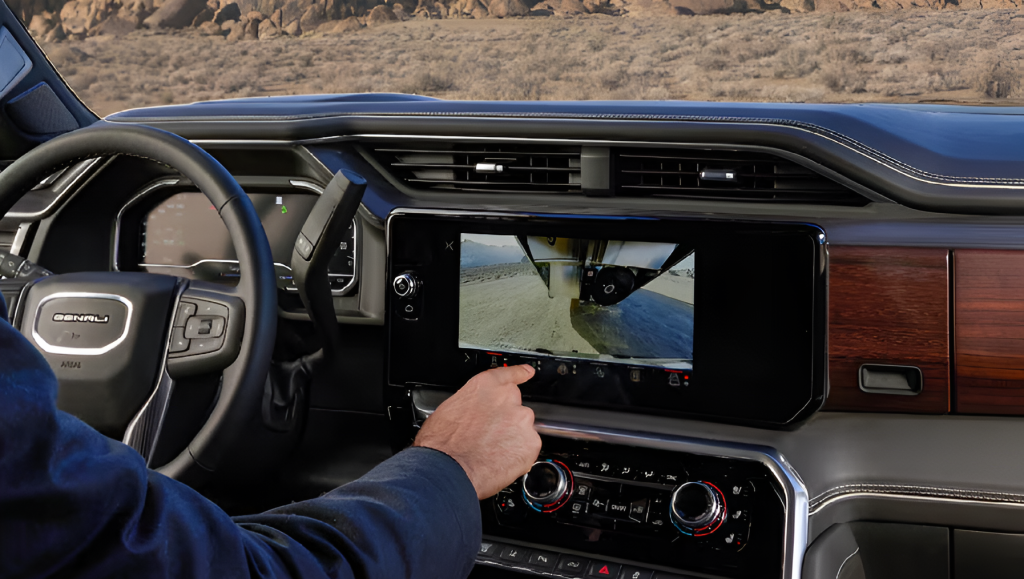
Imagine maneuvering your car into a tight parking spot with a clear view of everything around you, even those pesky blind spots. This is the magic of a surround vision camera system. By utilizing strategically placed cameras around the vehicle, this system stitches together a real-time, 360-degree bird’s-eye view of your surroundings. This panoramic view is displayed on your car’s infotainment screen, giving you an unparalleled vantage point that eliminates guesswork and makes parking a breeze. No more worrying about curbs, misplaced cones, or that mysterious object lurking just out of sight.
Surround vision camera systems are particularly valuable for drivers who navigate tight spaces regularly or those new to handling larger vehicles. They offer an extra layer of confidence when maneuvering in parking lots, narrow streets, or even your own driveway. Additionally, these systems can be helpful when navigating off-road terrain, allowing you to see obstacles that might otherwise be hidden from view.
The Convenience of Adaptive Cruise Control
Ever get tired of constantly adjusting your speed to maintain a safe distance from the car in front of you on long highway journeys? Adaptive cruise control (ACC) takes the monotony out of highway driving by automating this task. This system uses radar or camera technology to detect the vehicle ahead and automatically adjusts your car’s speed to maintain a pre-set distance. ACC not only reduces driver fatigue but also helps to ensure consistent speed and smooth traffic flow.
Imagine this: you set your desired cruising speed on the highway, and ACC takes care of the rest. The car seamlessly adjusts its speed as traffic conditions change, maintaining a safe distance from the vehicle ahead. This allows you to relax and focus on the road while still being in complete control. With a simple tap on a button or a nudge on the cruise control lever, you can easily adjust the following distance to suit your comfort level. Additionally, some advanced ACC systems can even bring your car to a complete stop in heavy traffic situations and resume driving when the flow resumes.
Alerts and Assistance with Lane Departure Warning and Lane Keep Assist
Modern highways can be a maze of lanes, especially in busy urban areas. It’s easy for even the most attentive driver to unintentionally drift out of their lane momentarily. This is where lane departure warning (LDW) and lane keep assist (LKA) come in. These features work together to ensure you stay within the designated lane markings.
LDW utilizes cameras to monitor lane markings on the road. If the system detects your car starting to drift out of its lane without activating the turn signal, it will trigger an alert, usually an audible warning or a visual cue on the dashboard. This gentle nudge reminds you to correct your course and stay within the lane boundaries.
Lane keep assist (LKA) takes things a step further. In addition to the alerts provided by LDW, LKA can provide gentle steering assistance to guide your car back into its lane. This can be a lifesaver in situations where driver drowsiness or distraction might lead to unintentional lane departure. It’s important to remember, however, that LKA is meant to be an assistant, not a replacement for safe and attentive driving. You should always keep your hands on the wheel and maintain control of the vehicle.
Taking the Stress Out with Park Assist
Parallel parking can be a nerve-wracking experience, especially for new drivers or those navigating tight city streets. Park assist systems take the stress out of parking by providing visual and audible guidance throughout the maneuver. These systems use various sensors, including ultrasonic sensors and cameras, to detect the available parking space and guide you through the parking process.
With park assist, you simply activate the system and follow the on-screen prompts or audible instructions. The system will take control of the steering wheel, meticulously maneuvering your car into the parking space while you control the forward and backward motion using the brake pedal. This can be a game-changer for drivers who struggle with parallel parking or simply want to avoid the hassle of tight maneuvering.
It’s important to note that park assist systems are not a magic bullet. They require a certain amount of space to function properly, and they may not work in all parking situations. However, they can be a valuable tool that can significantly reduce parking anxiety and make the process more efficient.
Remember: It’s important to consult the owner’s manual for your specific GMC or Buick model to get a complete list of the ADAS features included in your vehicle. Features may vary depending on the model year, trim level, and options selected.
Explore Advanced Safety at Eagle Buick GMC
At Eagle Buick GMC in Homosassa, we understand the importance of safety for our customers and their families. That’s why we’re proud to offer GMC and Buick vehicles equipped with the latest advanced driver-assist features, helping you drive confidently and securely on every journey.
Also, at Eagle Buick GMC, we’re committed to providing Homosassa drivers with vehicles that prioritize safety. Our GMC and Buick models are equipped with cutting-edge driver-assist features designed to enhance your peace of mind on the road.
For those seeking the latest in automotive technology, our guide on the Latest Tech Features in 2024 GMC Models at Eagle Buick GMC highlights innovations that elevate your driving experience. If luxury and comfort are your top priorities, don’t miss our guide on the Ultimate Comfort Features in GMC Vehicles at Eagle Buick GMC. Discover how these vehicles blend style and ease seamlessly.
And for those planning family road trips or simply looking to keep everyone entertained, the Entertainment Features in Buick Models at Eagle Buick GMC will show you how Buick keeps every passenger engaged.
Visit us today to experience these technologies firsthand, and let our friendly team help you find the perfect model that matches your safety needs and lifestyle.
Connect with us


- July 2026
- June 2026
- April 2026
- January 2026
- November 2025
- October 2025
- September 2025
- August 2025
- July 2025
- June 2025
- May 2025
- April 2025
- March 2025
- February 2025
- January 2025
- December 2024
- November 2024
- October 2024
- September 2024
- August 2024
- July 2024
- June 2024
- May 2024
- April 2024
- March 2024
- February 2024
- January 2024
- December 2023
- November 2023
- October 2023
- September 2023
- August 2023
- April 2023
- February 2023
- December 2022
- November 2022
- October 2022
- September 2022
- August 2022
- July 2022
- June 2022
- May 2022
- April 2022
- March 2022
- February 2022
- January 2022
- December 2021
- September 2021
- August 2021
- June 2021
- May 2021
- April 2021
- March 2021